
Markets continued firm trades with buying interest seen in realty, metal and banking shares. The BSE Sensex has gained 386 points (over 2 per cent) at 18,407, after touching a high of 18,456. Nifty is up 118 points at 5,553.

Retail inflation eased to 7.04 per cent in May, mainly on account of softening food and fuel prices as the government as well as the RBI stepped in to control spiralling price rise by way of duty cuts and repo rate hike. However, the inflation print stayed above the Reserve Bank's upper tolerance level of 6 per cent for the fifth month in a row. The Consumer Price Index (CPI) based retail inflation was 7.79 per cent in April.
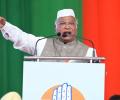
Congress president Mallikarjun Kharge has accused the BJP of rigging the Maharashtra assembly elections and called for a return to ballot paper voting. He also criticized the Modi government for selling off public assets, undermining democratic institutions, and promoting communal polarization. Kharge's remarks come as the Congress prepares for its AICC session in Ahmedabad, where it will present its political and economic views.
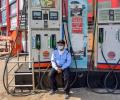
Hitting out at Prime Minister Narendra Modi over the issue of tax cuts on petroleum products, Tamil Nadu Chief Minister M K Stalin on Thursday said people were aware of the fact behind the issue and pointed out at his government effecting a Rs 3 a litre cut on petrol earlier.
India's appetite for imported crude oil may wane in fiscal year (FY) 2023 from record levels in pre-pandemic 2019-20 fiscal as higher oil prices, a spillover from the conflict in Ukraine, and increasing use of biofuels affect domestic demand for petroleum products. Brent crude surged to a nine-year high, shy of a July 2008 record $147.50 a barrel, before declining to around $100 a barrel - but the volatility in commodity rates will slow global economic growth and use of fuels. Demand for all oil products may grow at only 2-3 per cent in FY23, slower than the current fiscal and nearly half the 5.5 per cent growth estimated by the petroleum ministry, according to industry officials.

The excise duty cuts on diesel and petrol will cost Rs 45,000 crore and lead to a 0.3 percentage point widening on the Centre's fiscal deficit, a foreign brokerage said on Thursday. Going by the overall consumption, the costs of the surprise move - which came after months of concerns over high payouts at filling stations - for the entire fiscal will come at Rs 1 lakh crore or 0.45 per cent of GDP, economists at Japanese brokerage Nomura said in a report. For the remaining months of the ongoing FY22, the cost will come at Rs 45,000 crore, which leads to an upward review of the fiscal deficit target.
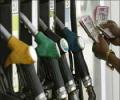
Price of petrol may go up by Rs 4.70 a litre and diesel by Rs 2.30 a litre.
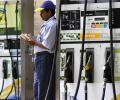
I admire Kejriwal's intelligence but pity the fact that he had to use all the ingenuity and scheming to achieve his revenue enhancement goal, says Sudhir Bisht.
Indian Oil Corporation has approached the petroleum ministry with a proposal to raise oil prices by Rs 5.29 a litre and diesel by 4.54 a litre in line with the price band formula worked out by the government.\n\n

A look at the key decisions taken by the Narendra Modi government in its six months.
Not only do you need an effective and independent regulator, you also need competition to flourish.
The Planning Commission on Tuesday made a case for increasing prices of petrol and diesel arguing that it was not a good idea to check inflation by keeping prices of petroleum products low.

The revised prices enhances the accessibility of these outstanding products, which offer segment-first safety features and class-leading technologies
Indian Oil Corporation sought an increase in prices of petrol, diesel, domestic LPG and PDS kerosene on Tuesday as spiralling global oil prices had put "enormous" burden and may result in a revenue loss of over Rs 8,500 crore (Rs 85 billion) this fiscal. While the government and oil companies were bearing their share of the burden, the consumers have so far been spared from any hike in fuel prices despite crude oil touching a historic high of $93 per barrel.

Prime Minister Mahinda Rajapaksa became the only member of the family to retain a cabinet position in his younger brother Gotabaya Rajapaksa's new cabinet of 17 ministers appointed on Monday, as the island nation was facing the worst economic crisis.
The chances of ending the current fiscal year at anywhere near the 5.5 per cent that RBI officially targets seem bleak indeed.
Global crude oil prices have slumped by 49 per cent during the same period
Price of diesel, LPG and kerosene will have to go up.

The Reserve Bank of India (RBI) on Wednesday announced to increase the policy repo rate by 50 basis points to 4.9 per cent, the second hike in five weeks aimed at quelling the inflation. The MPC vote was unanimous and has decided to keep stance withdrawal from accommodative, RBI Governor Shaktikanta Das said in a press conference on Wednesday. The decision was taken during a three-day meeting of the RBI's Monetary Policy Committee (MPC) to review the interest rates in the country. The MPC voted unanimously to increase the policy repo rate by 50 bps to 4.90 per cent," Das said.
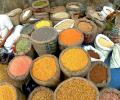
Prices of food items like cereals, pulses, and edible oils rose or remained steady in May, a Reserve Bank of India (RBI) report said, indicating there could be another higher inflation print. However, it observed that the Monetary Policy Committee's (MPC's) surprise move to increase interest rates bodes well for its credibility. The RBI's monthly State of the Economy report, released on Tuesday, citing high frequency food price data from the Ministry of Consumer Affairs for the period May 1-12, said the increase in the prices of cereals was primarily because of the surge in wheat prices.

Reliance Industries Ltd on Thursday reported a 7.4 per cent rise in its December quarter net profit, as its retail business rebounded and telecom earnings rose. Its consolidated net profit of Rs 18,540 crore, or Rs 13.70 per share, in October-December - the third quarter of April 2024 to March 2025 fiscal (FY25) - compared to Rs 17,265 crore, or Rs 12.76 a share, in the same period a year back, according to a stock exchange filing by the company.

Increasing the duties on auto parts and putting an additional cess on petrol and diesel could drive up costs of vehicles, specially where volumes are low and localisation is not viable.
We have requested the commerce department to delete the line that FDI was not permitted in the Railways, the minister said.

India, which imports over 80 per cent of its oil needs, spent $87.7 billion on importing 220.43 million tonne (MT) of crude oil in 2017-18. For 2018-19, the imports are pegged at almost 227 MT.
According to sources privy to the information, default rates have touched 5-6 per cent in the past six months as against the usual 1-2 per cent. Banks and other lending organisations agree that there has been a rise in delinquency rates, but the increase has only become significant during the past one month following the fuel hike. Fuel costs account for about 60 per cent of the total operating expenses of truckers.

The report said in the recent months policy makers as well as the private sector have made some efforts to improve productivity.
Petroleum Minister Murli Deora said on Monday the Centre was trying its best not to increase the prices of petroleum products like petrol and diesel even though the international oil prices had registered an upward trend in the past few months.
The recent price hike in petro products, notably diesel, appears to have exerted no pressure on commodity prices with inflation falling to 4.09 per cent in the week ended July 2 mainly due to cheaper food items.
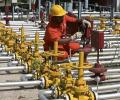
The oil ministry has stopped making fresh allocation of natural gas from domestic fields to the city gas sector, threatening the viability of Rs 2 lakh crore investment planned in the sector besides leading to a hike in CNG and piped cooking gas prices to record levels, sources said. Despite a decision of the Union Cabinet to give 100 per cent gas supply under 'no cut' priority to the city gas distribution (CGD) sector, current supplies have been maintained at March 2021 demand level. Besides, the process of allocating gas on a six-monthly average drawl also is punishing the CGD entities driving growth.

Opposition members in the Lok Sabha on Monday blamed the Bharatiya Janata Party-led central government's policies for the price rise and accused it of ignoring the plight of common people, saying kitchens will soon "see a lockdown" if the Centre does not take corrective measures.
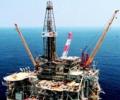
The government is set to dump B K Chaturvedi panel's recommendation for a monthly increase in fuel prices till they are at par with costs, but may accept the high-powered committee's suggestions for imposing a tax on oil produced from fields awarded before 1999.

India's dependence on imported crude oil to meet domestic demand has been a matter of concern for years. Delivering the inaugural address at the global energy summit - Urja Sangam - in 2015, Prime Minister Narendra Modi had called for enhancing domestic oil and gas production to cut the import burden. He aimed at lowering it by at least 10 per cent by 2022 - to coincide with the platinum jubilee of India's independence. But this target is far from being achieved and the country's import reliance has only risen.
India, where energy consumption per person is among the lowest in the world, has little elasticity in its fuel use as it tries to power exports and agriculture to help boost its economy and stave off a currency crisis.

This is the second hike in excise duty in less than two weeks as the government looks to make use of the slump in oil prices to shore up resources.

Higher prices are burdening household budgets and threatening the margins of leading manufacturers.
The petrol price hike has added to the woes of the common man.

Oil and gas players' wish list includes incentivising E&P investments and reintroduction of income tax holiday for exploration and production activities, among others.
Indian Oil Corporation, the country's largest oil firm, lost about Rs 4,900 crore (Rs 49 billion) in revenues during the first quarter of the current fiscal on selling fuel below the cost.
